

Equine Ovum Pick-Up – ICSI
High-Precision Equine Assisted Reproduction
The OPU-ICSI (Ovum Pick-Up + Intracytoplasmic Sperm Injection) technique is the most advanced method for producing equine embryos in vitro. This procedure has revolutionised equine reproduction, making fertilisation possible even in mares with reduced fertility, those in sporting activity, or those with reproductive issues.
Equine Ovum Pick-Up + Intracytoplasmic Sperm Injection
OPU-ICSI is the most advanced technique for producing equine embryos in vitro.
This procedure, originally developed for human reproduction, has revolutionised equine reproduction, making fertilisation possible even in mares with reduced fertility, those actively competing in sport, or those with reproductive issues.
What does it involve?
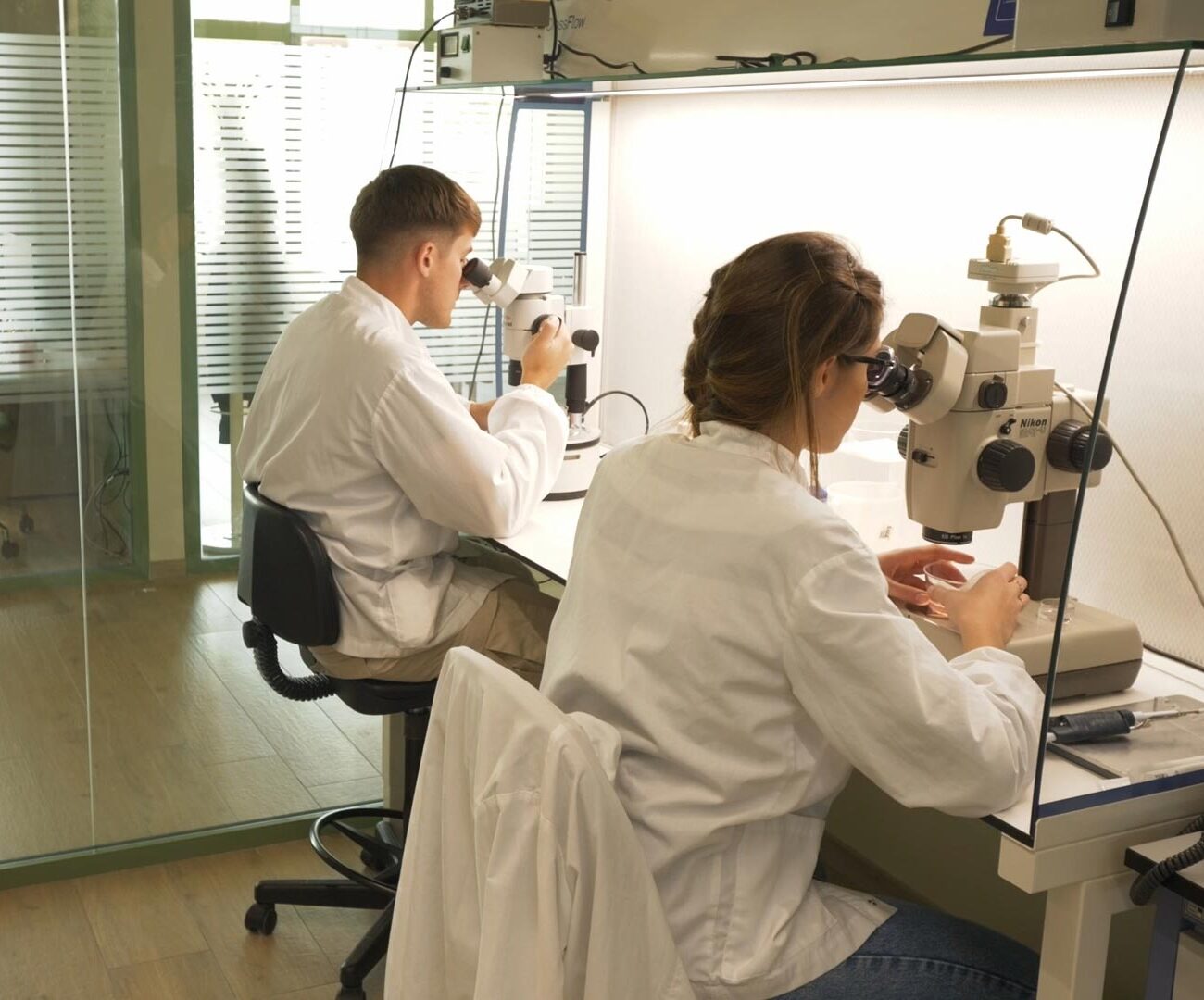
Ultrasound-guided retrieval of immature oocytes (OPU) directly from the donor mare’s ovaries, followed by their maturation in the laboratory.
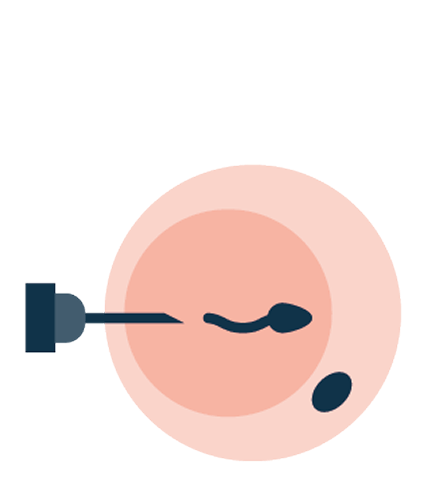
Once mature, the oocytes are fertilised using ICSI (Intracytoplasmic Sperm Injection), which involves injecting a single sperm cell directly into the oocyte.
After approximately 7–8 days of in vitro culture, the resulting embryos can be transferred to a recipient mare or cryopreserved for future use.
When is OPU-ICSI recommended?
OPU-ICSI is an advanced assisted reproduction technique suitable for mares of all ages and physiological conditions, and can be performed throughout the year.
In particular, it is recommended in situations where traditional insemination cannot be successfully applied:
Mares with uterine problems that prevent normal embryo development following natural or artificial fertilisation.
Sport mares for which there is no desire to interrupt training or their competitive career.
Older mares or mares with compromised fertility.
When embryos need to be produced outside the breeding season.
Semen from subfertile stallions, of poor quality or available in limited quantities.
Why choose OPU-ICSI instead of embryo flushing?
OPU-ICSI offers numerous advantages over traditional embryo flushing and embryo transfer, making it a better choice in many situations:
Greater efficiency in embryo production: OPU-ICSI makes it possible to obtain a higher number of embryos compared with flushing (an average of 2 embryos per OPU-ICSI procedure from mares in good physiological condition, compared with 0.6 embryos per traditional flushing-ET procedure).
Suitable for all mares: It is also suitable for mares with uterine or oviductal conditions and older mares that are unable to produce embryos through flushing.
Flexibility and planning: The embryos obtained can be frozen and transferred at a later stage, eliminating the need to synchronise the donor and recipient mares.
Available all year round: The procedure can be performed in any month of the year, regardless of the breeding season, both in autumn and winter and in spring and summer.
Less stress for the donor mare: It does not require preventive drug treatments or the repeated gynaecological examinations needed for the flushing procedure.
Optimised use of semen: Since only one sperm cell is used per oocyte, ICSI makes the most efficient use of the available semen, including semen from subfertile stallions or limited doses of rare semen.
Targeted genetic improvement: OPU-ICSI makes it possible to maximise the value of mares with high genetic potential, increasing the chances of producing foals with superior characteristics.
Who is Avantea’s equine OPU-ICSI service aimed at?
The service is aimed at breeders, owners, stables, breeding and reproduction centers, riders, trainers, and sport horse professionals who wish to enhance or preserve the genetic heritage of their mares. Avantea also collaborates with veterinarians and equine clinics.
From oocyte retrieval to embryo transfer, all in one centre.
A streamlined process that simplifies management and maximises your mare’s genetic potential.

step 1

OPU
step 2

ICSI

step 3
EMBRYO
PRODUCTION

step 4

EMBRYO
TRANSFER
Equine OPU-ICSI procedure
Let’s explore, step by step,
the equine OPU-ICSI process
and its advantages.
OPU
Ovum Pick-Up in mares
The OPU is the first step of the procedure, in which the immature oocytes are taken directly from the donor mare’s ovaries through an ultrasound-guided transvaginal aspiration.
How does mare OPU work?
The mare is sedated to ensure maximum comfort during the procedure. The veterinarian inserts an ultrasound probe into the vagina to visualize the ovaries and identify follicles. A guided needle is used to aspirate follicular fluid containing the oocytes. The aspirated fluid is immediately transferred to the laboratory, where oocytes are identified and prepared for in vitro maturation.
Advantages of OPU:
- A safe technique with minimal risk of complications.
- It can be performed year-round, independent of the mare’s estrous cycle
- Mares can resume their activities within hours after the procedure
FAQ
What characteristics must a donor horse have to be eligible for the OPU?
Any mare is suitable for the OPU procedure regardless of age, season and reproductive tract disorders. However, the best results are obtained with young mares, while efficiency may decrease in mares over 20 years of age.
Is a drug treatment necessary to prepare the horse for OPU?
No, no hormonal stimulation is required. The horse is sedated prior to the procedure and an epidural anaesthesia is performed if necessary for the welfare of the horse. At the end of the procedure, the veterinarian prescribes a short anti-inflammatory and antibiotic treatment as a precaution.
At what time of year can the OPU be carried out?
OPU can be performed at any time of the year, even in autumn and winter. The oocytes are always present in the ovaries and the embryos produced can be frozen and transferred later, at the desired time during the reproductive season.
When is my mare ready for OPU?
A preliminary ultrasound is recommended to check the donor mare’s ovaries for a sufficient number of follicles. For the procedure to be successful, the mare should have at least a dozen follicles measuring 0.8-1 cm and more.
Is OPU a painful procedure for the mare?
No, the procedure is designed to respect the welfare of the mare by minimizing any discomfort due to transrectal exploration and endovaginal probe placement. During OPU the mare receives sedation and, if appropriate, epidural anesthesia, operational precautions that eliminate any possible discomfort. At the end of the procedure, anti-inflammatory and antibiotic therapy is recommended for a few days as a precaution.
OPU is a minimally invasive and well tolerated technique by most mares. It can be performed several times at intervals of 1-3 months without any consequence on the future fertility of the mare.
Are there any risks associated with OPU?
As in any veterinary procedure, OPU also carries some risks, albeit rare. Possible complications include bleeding (rectal, vaginal or ovarian), loss of appetite, mild fever and in extremely rare cases, colic syndromes. However, thanks to the experience of the professionals who perform the procedure, using controlled operating protocols with appropriate equipment and sterile instrumentation, these risks are minimal.
The mares are closely monitored during and after oocyte collection for any signs of discomfort or side effects. At the end of the OPU procedure, the horses recover quickly from sedation and can return to their routine in the breeding or stable to continue their sports preparation.
Does OPU affect the mare’s future fertility?
No, the OPU procedure does not compromise the future fertility of the mare since tens of thousands of oocytes are present on the ovaries from birth; therefore, follicular aspiration does not substantially change the large pool of oocytes available for future oestrous cycles.
After the OPU, within a few days, the mare resumes normal follicular activity. Studies and clinical experience have shown that even after repeated OPU sessions, the ovarian structure and function remain unchanged, with no negative impact on the likelihood of future pregnancy.
How often can the OPU be run on the same mare?
Typically, an interval of about three to six weeks is expected between sessions, depending on the dynamics of new ovarian follicles development.
How long should the mare stay in the clinic for OPU?
The OPU procedure lasts about 30-45 minutes, can be performed in day hospital and in most cases the horse returns to its stable on the same day, after a precautionary observation period of 23 hours, to ensure that the mare has recovered from the sedation.
For horses that have to face long journeys or tend to stress during the transport, we recommend a overnight stay in the clinic until the next day, so as to ensure their well-being. If necessary, Avantea also offers the possibility to host the horse for a longer period, monitoring its cycle and planning the OPU at the most appropriate times.
How long does it take for the horse to resume its sporting activities?
The horse can gradually resume its activities within a few days, starting with a flat work and continuing with its normal training program and calendar of sports competitions.
IVM
In Vitro Maturation of Equine oocytes
After collection, immature oocytes are cultured in a controlled environment for approximately 24-30 hours, allowing them to complete the maturation process required for fertilization.
Why is it important?
IVM replicates the natural process of egg maturation in the laboratory. Approximately 70% of oocytes successfully complete maturation.
ICSI
Intra Cytoplasmic Sperm Injection
Once matured, the equine oocytes are fertilized using the ICSI procedure, a highly specialized technique in which a single sperm is directly injected into the oocyte.
How does ICSI work in horses?
A small portion of frozen semen is thawed and centrifuged to isolate the most motile sperm.
A single sperm is selected and injected into the oocyte using a micro-needle. The fertilized oocytes are then cultured in a laboratory incubator at 37.5–38°C for eight days to support embryonic development.
Benefits of equine ICSI:
- Enables fertilization even with low-quality or rare semen.
- Maximizes the efficiency of frozen semen, minimizing the quantity required for each fertilization.
- Achieves a higher fertilization success rate compared to traditional insemination.
FAQ
Which stallions can be used for ICSI?
Semen of any stallion may be used, including those with reduced fertility or limited seed availability.
Can I use more than one stallion for the same mare in an aspiration?
Yes, but the laboratory recommends to use a second stallion for the same donor only if at least 16 mature oocytes have been obtained, that is suitable for fertilization, dividing them equally between the two stallions. This is to optimize the use of semen and have a reasonable expectation of getting at least one embryo from each stallion.
In most cases only one stalk is used for each OPU-ICSI procedure.
How much semen is needed for ICSI?
ICSI is an extremely efficient technique in the use of semen, since it requires only one sperm for each fertilized oocyte. This allows maximum optimization of even the most limited or valuable seed quantities, as in the case of stallions with reduced fertility or rare seed.
Generally, the semen of stallions is frozen in paillettes containing about 100 million spermatozoa. For flushing is usually used an inseminating dose of 3 paillettes. With ICSI, instead, it is not necessary to thaw a whole paillette: only a small portion is taken under liquid nitrogen, allowing the same paillette to be reused for several sessions. A single sequin may be sufficient for 8-10 ICSI sessions.
If the semen has been frozen in doses specifically prepared for ICSI, it is possible to further reduce the quantity required. However, some doses of semen, originally frozen for traditional insemination and subsequently thawed, diluted and re-frozen in smaller quantities for ICSI, may be of lower quality. For this reason, it is always advisable to check the origin and quality of the seed before purchase and use.
IVC
In Vitro Culture
Fertilized oocytes are cultured in a controlled environment for approximately eight days, allowing them to develop to the optimal stage for freezing or transfer.
Expected results:
The resulting embryos can either be cryopreserved or transferred immediately to a recipient mare.
FAQ
What is the probability of obtaining an embryo via ICSI?
The likelihood of obtaining an embryo through ICSI depends on several factors, including the quality of the oocytes and the semen used. However, the average figures show that:
- About 12-16 follicles are suctioned from each OPU session.
- The collection rate is 60-70%, so on average 9-12 oocytes are obtained.
- Of these, about 20% develop successfully in embryos suitable for freezing/transfer, leading to an average of 2 embryos per OPU session.
What factors influence ICSI results?
The results of ICSI may vary based on several factors. The quality of the oocytes is decisive and tends to decrease with the age of the donor mare, as well as the quality of the semen used can affect the fertilization rate. The selection and preparation of the receiving mare also plays a crucial role in ensuring successful implantation and pregnancy. Finally, the individual response of the donor is a key element: some mares produce more embryos per cycle, while others, with fewer follicles or lower quality oocytes, may have a lower number of embryos.
Opzionale
Embryo Freezing
Cryopreservation of Embryos
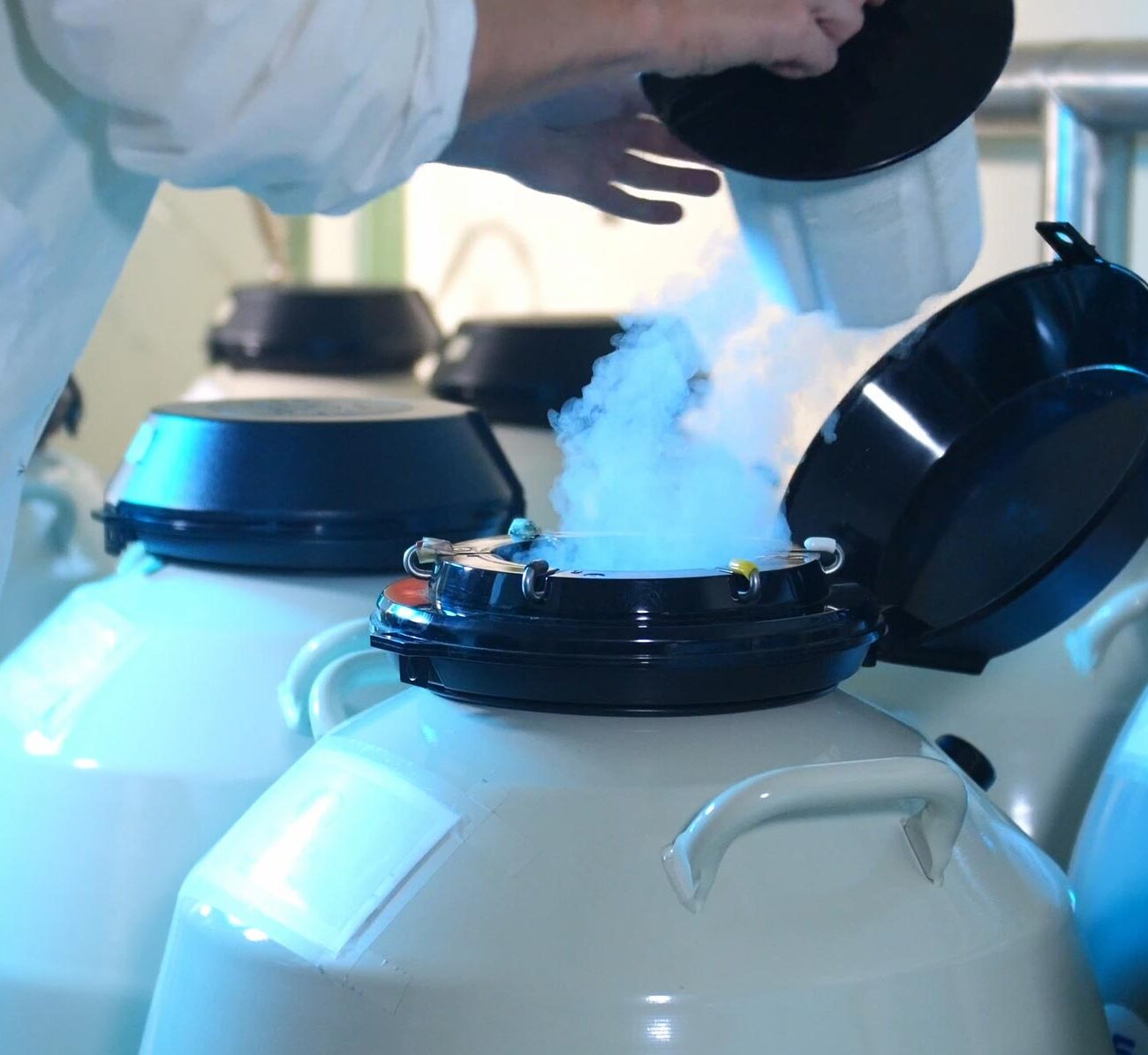
Embryos can be cryopreserved in liquid nitrogen at -196°C, allowing for future transfer.
Benefits of Embryo Freezing:
- Enables embryo transfers to be scheduled without requiring cycle synchronization of recipient mares.
- Facilitates the commercial distribution of embryos similarly to frozen semen
- Enhances farm management by allowing embryos to be produced in winter for transfer in spring
FAQ
How long can embryos be frozen?
Embryos frozen in liquid nitrogen can remain viable indefinitely if storage conditions are monitored and the level of liquid nitrogen remains constant over time. Frozen embryos may be transported from the production laboratory to other destinations. For the transport of embryos, special cryogenic containers are required, suitable also for international handling by air.
Are there differences between a fresh and a frozen embryo?
No, if the freezing and thawing processes are performed correctly, pregnancy rates between fresh and frozen embryos will be similar.
Opzionale
Embryo Transfer
Embryo Transfer to the Receiving Horse
The developed embryo, whether fresh or thawed, is transferred to a recipient mare, which will carry the pregnancy to term.
How does it work?
The embryo is carefully loaded into a transfer pipette and deposited in the uterus of the recipient mare. After approximately 12 days, an ultrasound is performed to confirm implantation and the establishment of pregnancy.
Advantages of using a receiving mare:
- Enables the production of multiple foals per year from the same donor mare.
- Reduces the risk of uterine complications for the donor mare.
- Allows the donor mare to continue her sports career uninterrupted.
- Provides greater flexibility in embryo management and transfer scheduling.
FAQ
What are the chances of pregnancy with an ICSI embryo?
After transfer, 70-75% of the receiving mares initially remain pregnant, subsequently pregnancy losses are about 10 percentage points, comparable to rates normally found after artificial insemination.
Is it necessary to have receiving horses for embryo transfer?
Yes, to achieve a pregnancy it is essential to have a suitable recipient mare. At Avantea, there are more than 500 carefully monitored receiving mares to ensure the best conditions for implantation and pregnancy.
Thanks to the possibility of freezing embryos, the transfer can be scheduled at the most appropriate time, choosing the most suitable recipient without having to respect tight time constraints. This ensures greater flexibility and optimal reproductive success.
What characteristics must a receiving mare have to ensure the best fertility rates?
The receiving mares with the best fertility rates are young, healthy and well-nourished mares. Generally, those between the ages of 4 and 10 years old with a regular cycle and a positive reproductive history have the best chances of success in implantation and development of pregnancy.
The best candidates are strong horses, of good constitution, with solid limbs and good character. Virgin mares give the best guarantees of reproductive health even if some breeders prefer females that have already given birth, demonstrating good maternal attitude, because milk production and behaviour with the foal positively affect the growth and health of the newborn.
Does the receiving mare transmit its genes or character to the foal?
No, the foal’s genetics are derived exclusively from its biological parents while the receiving mare does not transmit any of its genes to the foal. However, the recipient can affect the growth of the foal with her maternal aptitude and milk production quality.
Is it possible to use a mother in lactation for the implantation of an embryo?
Yes, but the success rate may be slightly lower. The best candidates are healthy mothers between 4 and 10 years old, who have had a birth without complications. Usually, the embryo transfer is performed after the second or third postpartum ovulation, to ensure the best uterine conditions for the onset of pregnancy.
Access OPU wherever and however you prefer.
Access OPU wherever and however you prefer.
You decide where to begin your
OPU–ICSI journey.
OPU-ICSI in Avantea
The Ovum Pick-Up–ICSI (OPU-ICSI) is an advanced assisted reproduction technique involving the retrieval of oocytes from the donor mare, fertilisation through Intracytoplasmic Sperm Injection (ICSI), and laboratory culture until the embryos reach a stage suitable for freezing.

OPU in a partner clinic – ICSI in Avantea
OPU can be performed at one of our partner clinics, while oocytes are transported to Avantea for ICSI and embryo development. A flexible solution that gives mares and owners access to Avantea’s specialised laboratories and expertise, while allowing the OPU procedure to be carried out at a location closer to home.
Additional services
Avantea offers a range of complementary services alongside OPU-ICSI to support breeders and owners in the management of equine reproduction.
Scientific research and results in equine OPU-ICSI
Over thirty years of research in animal reproduction underpin Avantea’s work. Discover the success rates of equine OPU-ICSI and the scientific contribution of our team.